
Mugu – Mugum Karmarong Rural Municipality in Mugu district has generated more than Rs 2.83 million in revenue from the collection of yarsagumba during the current fiscal year, despite a noticeable decline in the number of harvesters and overall production of the valuable medicinal herb.
The rural municipality collects a fee of Rs 2,000 from local collectors within the district and Rs 2,500 from those arriving from outside Mugu for access to alpine pasture areas where yarsagumba is found.
According to Information Officer Sobendra Malla, municipal officials have been deployed directly to high-altitude collection sites to ensure effective fee collection and boost local revenue. However, he noted that earnings have fallen compared to previous years as fewer people are participating in the harvest.
“In earlier years, between 5,000 and 6,000 collectors would travel to the alpine pastures. This year, the number has dropped significantly, leading to lower revenue collection,” Malla said.
Yarsagumba, one of Nepal’s most valuable medicinal herbs, is found in the highland forests of Rimar, Thulo Koiki, Sano Koiki, Chhapakhola, and Charkul in Ward No. 2 of the rural municipality.
Rural Municipality Chairperson Chhiring Kyapne Lama said income generated from yarsagumba collection will be invested in social and physical infrastructure projects, educational support, and the management and security of harvesting activities.
Climate Change Impacting Production
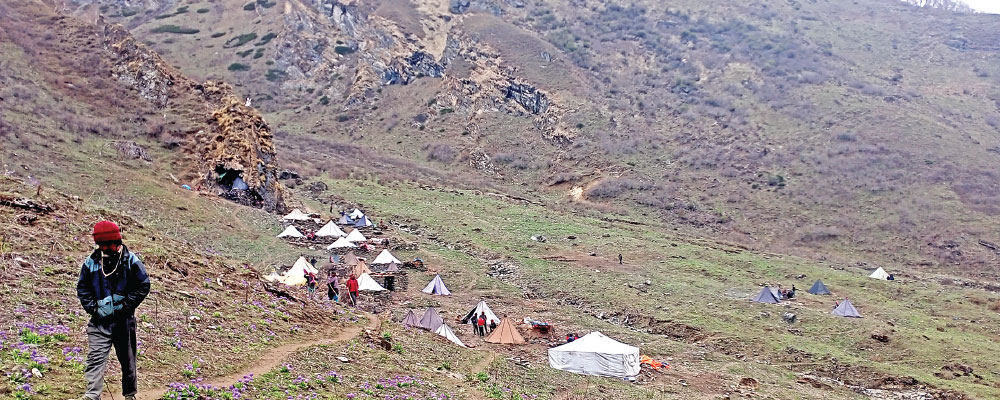
For communities across Nepal’s Himalayan region, yarsagumba collection remains a major source of seasonal income. Every year, thousands of locals undertake difficult and often risky journeys to remote alpine pastures, living in temporary camps for weeks while searching for the prized fungus.
Local resident Pema Chhiring Lama said collectors typically begin heading to the mountains in late May, carrying food supplies and essential equipment for a month-long stay near harvesting areas.
However, locals report that yarsagumba production has been steadily declining over recent years, threatening a vital source of livelihood. Another resident, Thilyakunjuk Lama, said the herb, once abundant in the region, is becoming increasingly scarce.
According to him, rising temperatures and changing climatic conditions have reduced the cold environment necessary for yarsagumba growth. Data collected over the past five years also indicates a consistent decline in both production and collection, raising concerns about the long-term sustainability of the Himalayan herb industry.