

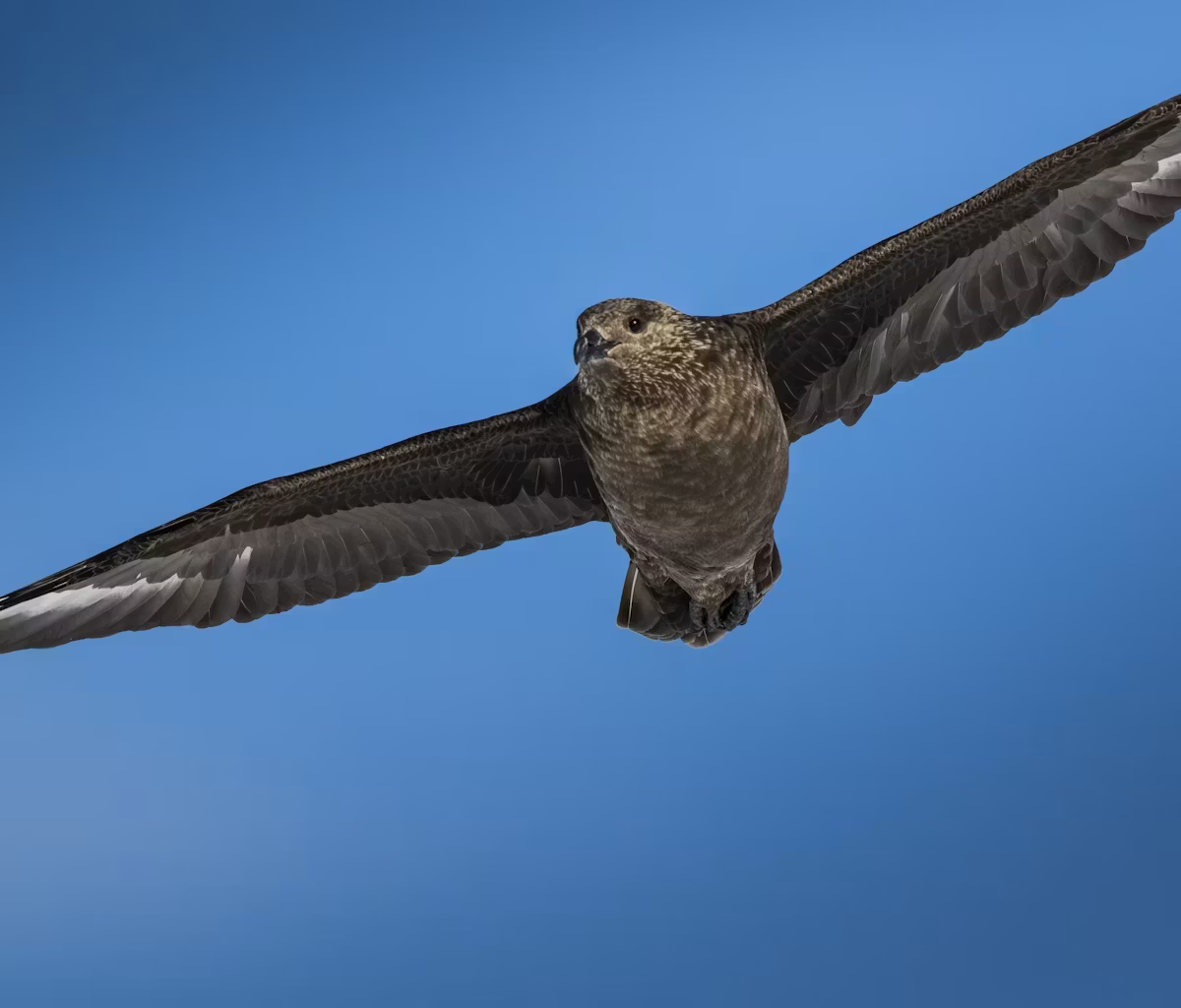
Auckland – New Zealand has confirmed its first case of the highly pathogenic H5N1 avian influenza (bird flu), marking a significant development in the country’s biosecurity efforts. The virus was detected in a brown skua found dead on Petone Beach in Wellington, prompting authorities to strengthen nationwide surveillance and wildlife monitoring.
Biosecurity Minister Andrew Hoggard confirmed the detection on Wednesday, saying the arrival of the virus had been anticipated and that New Zealand had spent years preparing for such an event. Just a day earlier, he had warned that H5N1 “could arrive at any time.”
Major concern for native wildlife
Scientists say the H5N1 strain, which has spread widely across the Northern Hemisphere since 2020, is particularly concerning because it spreads rapidly among wild birds. The Department of Conservation (DOC) warned that New Zealand’s native seabirds and several threatened species could be especially vulnerable if the virus spreads further. Internationally, H5N1 has caused large-scale deaths among wild birds and marine mammals.
University of Otago evolutionary virologist Dr Jemma Geoghegan said the immediate priority is determining how widely the virus may already be circulating. “Our concern is understanding whether this is an isolated detection or evidence of broader spread,” she said, adding that rapid testing, genomic sequencing and close monitoring of wild bird populations would be essential.
How did the virus arrive?
Experts believe the brown skua is one of the seabird species most likely to spread the virus across oceans. The birds are scavengers and predators that frequently feed on dead animals and other birds, increasing their exposure to infection.
International research has identified skuas and giant petrels as key species involved in carrying H5N1 from South America across the Southern Ocean.
The virus can spread through infected birds’ saliva, mucus, droppings or carcasses.
Government steps up surveillance
New Zealand authorities have been preparing for the virus following outbreaks in Australia and elsewhere. The Ministry for Primary Industries (MPI), the Department of Conservation, laboratories and wildlife experts are now working together to monitor the situation.
The government is urging the public to immediately report sick or dead birds—particularly groups of seabirds found along coastlines—to MPI. Officials have also advised people not to handle dead or sick birds and to keep pets away from them.
Low risk to human health
Health New Zealand says the risk to the general public remains very low. There has never been a confirmed human case of avian influenza in New Zealand, and human infections are extremely rare, usually occurring only after prolonged close contact with infected birds or animals. Health officials stressed that bird flu does not spread easily between people, and there is no reason for public alarm.
Previous bird flu outbreak
New Zealand previously dealt with a different strain of bird flu, H7N6, which was detected at a commercial poultry farm in Otago in December 2024. More than 150,000 chickens were culled to contain that outbreak. However, experts say the newly detected H5N1 strain is different and significantly more contagious among wild birds, making continued surveillance particularly important.
While authorities have described the situation as serious, they emphasised that New Zealand is well prepared, with enhanced testing, monitoring and biosecurity measures already in place. Officials are encouraging the public to remain vigilant, follow official advice and report any unusual bird deaths promptly.