
Mustang, Nepal – Before sunrise, the cold mountain air sweeps across the alpine meadows beneath the towering Himalayan peaks. Reaching Marche Lake, perched at nearly 4,000 metres above sea level in Thasang Rural Municipality of Mustang, is no easy journey. Visitors must trek for hours uphill from the Beni–Jomsom road. Yet every day, despite rain, slippery trails and harsh weather, hundreds of people make the demanding climb, driven by a single hope – that drinking fresh yak blood might bring relief from long-standing illnesses.
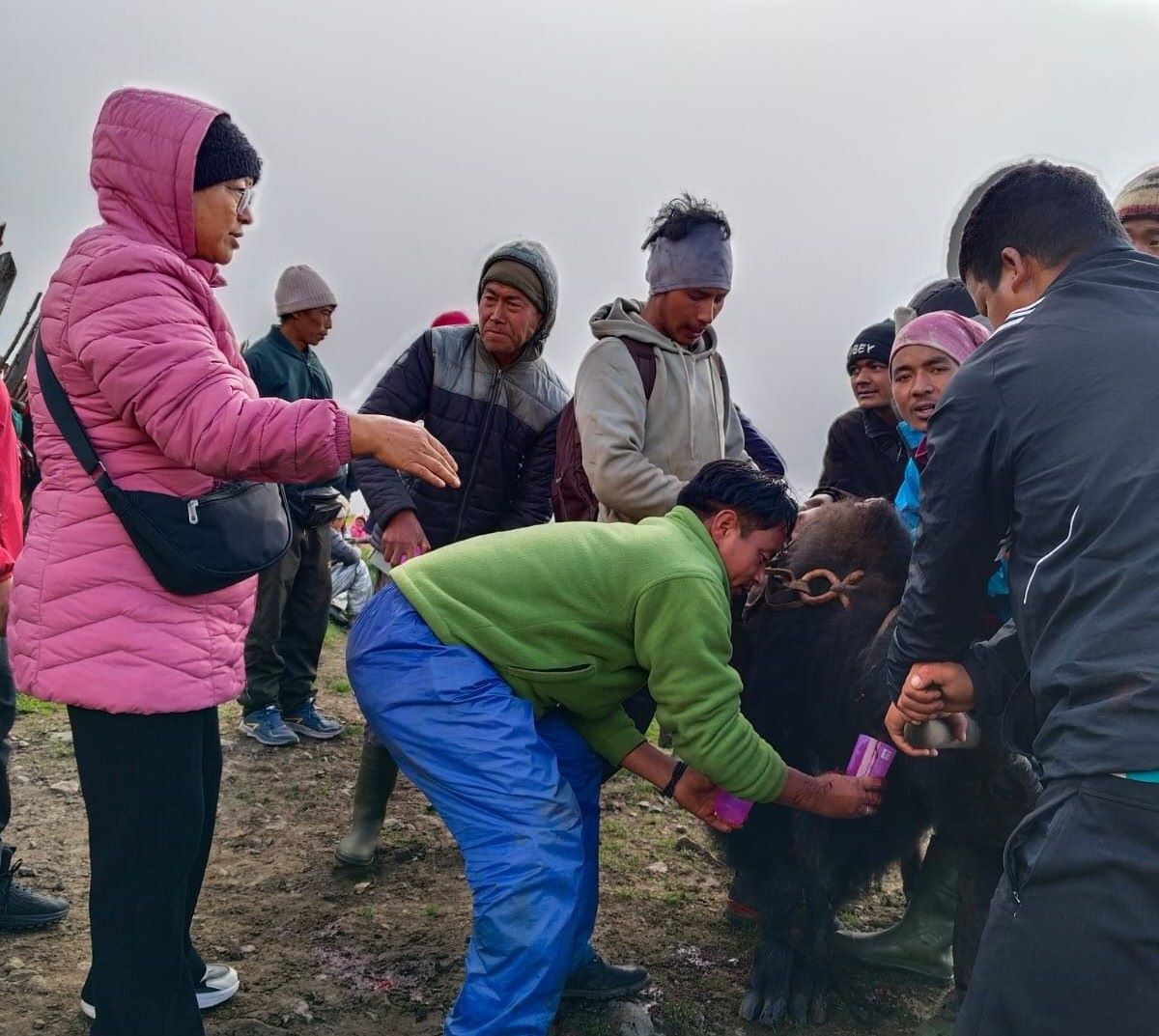
The remote Himalayan pasture has become an unusual destination where people who say they have found little improvement through conventional medical treatment gather to follow a centuries-old tradition. They patiently queue beside yak herds to drink freshly drawn blood, believing it can restore health and vitality.
Among them is Ram Prasad Tilija of Pokhara Metropolitan City–15, Rambazar. After struggling for years with chronic gastric and gallbladder-related problems, he sought treatment at several hospitals. Although medication provided temporary relief, he says his condition never fully improved.
Following advice from friends, Tilija travelled to Marche Lake for the first time three years ago to try drinking fresh yak blood. He says he noticed an improvement and has continued the practice ever since.
“I have been coming here twice a year for the past three years,” Tilija said. “While I stay here, I drink two glasses of fresh yak blood every day. I feel my health has improved significantly, so now I come regularly with friends.”
Saniya Rantija from Bhurung Tatopani in Myagdi’s Annapurna Rural Municipality is another visitor who has travelled to Marche Lake with family members, sharing the same belief. Like many others from across Nepal, she spends about a week in the high-altitude pasture drinking fresh yak blood daily.
Many visitors believe that yaks grazing on alpine pastures rich in medicinal herbs such as yarsagumba and other Himalayan plants produce blood with healing properties capable of boosting energy and easing chronic ailments.
The annual fair, organised by the Marche Yak-Nak Conservation Committee, began on July 17 (Shrawan 1) and continues to attract large crowds despite unpredictable mountain weather.
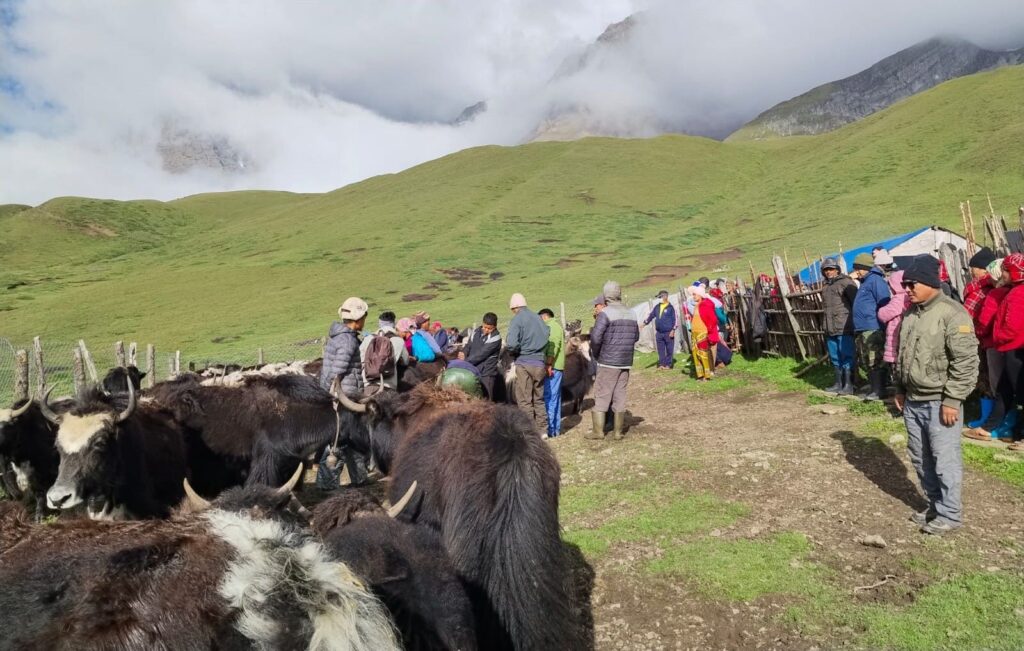
Committee member Sojan Hirachan said more than 200 people drink fresh yak blood at the site every day.
“Many visitors stay here for a week, and some drink up to 15 glasses during their visit,” Hirachan said. “Interestingly, we see more repeat visitors than first-time visitors. Many come here after finding little satisfaction with hospital treatment.”
The belief that fresh yak blood can relieve digestive disorders, joint pain, nerve-related illnesses, physical weakness and even improve sexual health has been passed down through generations. However, medical experts stress that there is only limited scientific evidence supporting these claims.
Despite the lack of scientific confirmation, thousands of people continue to travel to Marche Lake each year, relying on personal experiences, word-of-mouth recommendations and traditional beliefs.
According to Mahendra Sherchan, coordinator of the Marche Yak-Nak Conservation Committee, the annual fair has also become an important economic lifeline for local yak herders.
“The income generated from the fair is distributed among yak farmers,” Sherchan said. “It helps support yak conservation, expand grazing operations and encourage local farmers to continue raising yaks.”
This year, around 750 yaks from ten different herds have been brought to the fair. Farmers typically collect between 15 and 20 glasses of blood from each animal, while some larger yaks yield up to 50 glasses. The blood is drawn by making a small incision in the animal’s neck using a specially designed sharp instrument.
A single glass of fresh yak blood costs Rs200.
Besides fresh blood, visitors also purchase yak meat, butter, dried cheese (chhurpi), horns, tails and gallbladders. Organisers estimate that visitors staying throughout the fair spend between Rs5,000 and Rs25,000 on food and local products.
Many participants travel from Myagdi, Kaski, Kathmandu, Butwal and other parts of Nepal, while people originally from the region often return home specifically to attend the event. According to organisers, nearly 70 percent of visitors come from neighbouring Myagdi district.
Health authorities, however, urge caution.
Medical professionals warn that consuming raw blood carries potential risks because it may contain parasites, bacteria or other harmful pathogens. They recommend that blood should be properly cooked before consumption and emphasise that drinking raw yak blood is not a scientifically proven treatment for any disease.
To reduce health risks, the Mustang Agriculture and Livestock Development Office and Thasang Rural Municipality provide free anti-parasite medication for the yaks participating in the fair.
In the Himalayan region, the male animal is known as a yak, while the female is called a nak. The annual Marche fair was originally established to promote yak conservation, support breeders and preserve traditional Himalayan livestock farming. Today, it has also become one of the region’s most important sources of seasonal income.
Many people who miss the annual yak blood fair held each spring at Ghattekhola along the Kali Gandaki Corridor instead travel to Marche Lake during the monsoon season.
The fair runs until July 26 (Shrawan 10), and once again this year, hundreds continue their journey into the high Himalayas—carrying with them hope, tradition and the belief that healing may still be found in one of Nepal’s oldest mountain customs.