
As people grow older, changes occur throughout the body, and a gradual decline in hearing is one of the most common. Yet hearing loss is often dismissed as a normal part of ageing and, as a result, many older people do not seek help until the problem has significantly affected their daily lives.
Hearing loss is far more than a minor inconvenience. Difficulty hearing can affect a person’s confidence, family relationships, social participation and mental wellbeing. Despite this, many older people are reluctant to acknowledge that their hearing is declining, while family members may simply assume that reduced hearing is an inevitable consequence of growing older.
This can delay the diagnosis of conditions that may be treatable and reduce opportunities for effective intervention. Over time, an older person with untreated hearing loss can become increasingly isolated, withdrawn and disconnected from family and society.
The World Health Organization (WHO) estimates that hundreds of millions of people worldwide live with some form of hearing loss, with older adults making up a significant proportion of those affected. As life expectancy continues to increase, age-related hearing loss is becoming an increasingly important public health issue.
Nepal is no exception. As the country's population ages and life expectancy rises, hearing-related problems are also becoming increasingly common among older people.
Why does hearing decline with age?
The gradual loss of hearing associated with ageing is medically known as presbycusis. It is one of the most common sensory problems associated with ageing.
The human ear is a highly complex system. The outer ear collects sound, the middle ear transmits it, and tiny hair cells inside the cochlea of the inner ear convert sound waves into nerve signals. These signals are then sent to the brain, where they are interpreted as speech, music and other sounds.
As people age, these delicate hair cells can gradually become damaged or die. Once destroyed, they cannot naturally regenerate. This is one of the main reasons hearing gradually deteriorates with age.
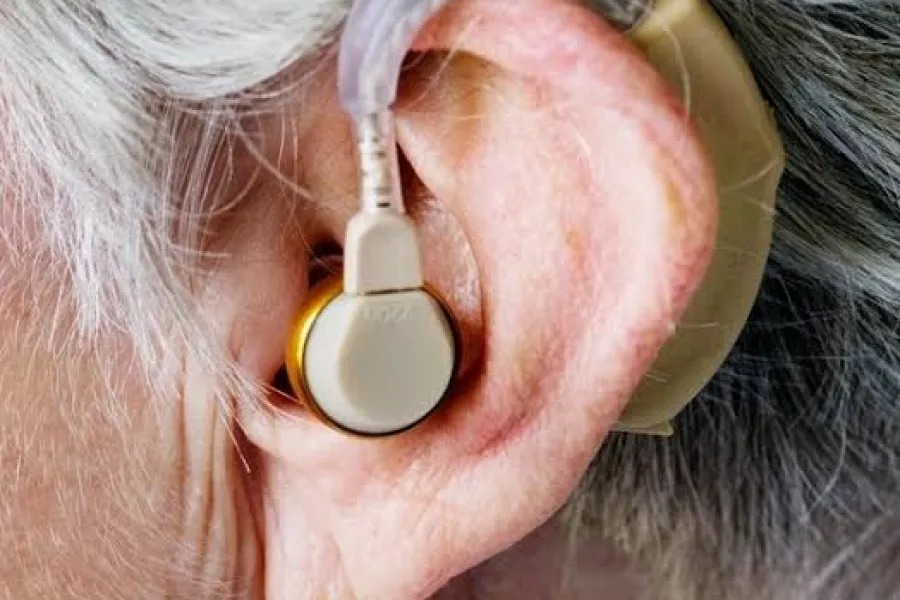
Presbycusis cannot currently be completely reversed, but modern technology can significantly reduce its impact. For many people, hearing aids can substantially improve communication and quality of life.
However, ageing is not the only cause of hearing loss. Long-term exposure to loud noise—including in factories, construction sites, airports and other noisy environments—can damage hearing. Diabetes, high blood pressure, smoking, certain medications and genetic factors can also contribute to hearing problems.
The warning signs are often subtle
Hearing loss usually develops gradually rather than occurring suddenly. Because of this, people may not immediately realise that their hearing is deteriorating.
Common warning signs include needing to turn the television volume higher than other people prefer, frequently asking others to repeat themselves, hearing that someone is speaking but struggling to understand the words, and finding conversations difficult in crowded or noisy places.
Some people may also struggle to understand children or people with higher-pitched voices, repeatedly ask, “What did you say?”, or find it difficult to follow conversations when several people are speaking at the same time.
Family members may notice another important sign: having to speak increasingly loudly when communicating with an older relative.
These symptoms should not simply be dismissed as a normal part of ageing. They may indicate an underlying hearing problem that requires assessment.
Many people think of hearing loss as simply an ear problem. In reality, its effects can extend much further, potentially affecting family relationships, confidence, social interaction and overall wellbeing.
Why hearing tests matter
Anyone experiencing persistent hearing difficulties should have their hearing assessed rather than attempting to begin treatment without a proper evaluation.
A hearing assessment may include an examination of the ear, pure-tone audiometry, which measures the degree and type of hearing loss, and speech audiometry, which assesses how clearly a person can understand spoken words.
Depending on the individual and the suspected cause, specialists may also use tests such as tympanometry, otoacoustic emissions (OAE) and auditory brainstem response (ABR).
These tests help determine the type and severity of hearing loss and guide appropriate treatment.
Tinnitus in older age
Some older people notice ringing, buzzing, humming or other sounds in their ears rather than simply experiencing reduced hearing. This condition is known as tinnitus.
Tinnitus can be associated with age-related hearing loss, prolonged exposure to loud sounds, certain medications, ear infections and psychological stress. Treatment depends on the underlying cause.
For some people, hearing aids, sound therapy and counselling can help reduce the impact of tinnitus and improve their quality of life.
Family support can make a major difference
Family members play an important role in supporting older people with hearing loss. Above all, communication requires patience and respect.
When speaking with someone who has difficulty hearing, family members should face the person directly and make sure their face is clearly visible. Speaking clearly at a normal pace is generally more helpful than shouting.
It is also useful to avoid having several people speak at the same time, use subtitles when watching television if necessary, and encourage the person to use a hearing aid when recommended.
Most importantly, hearing difficulties should not be something a person feels they need to hide. Families can make a significant difference by helping older relatives seek appropriate assessment and treatment.
Small changes in communication and family behaviour can greatly improve an older person's confidence and ability to remain socially connected.
Prevention remains important
Not all hearing loss can be prevented, but a number of measures can help protect hearing.
People should avoid prolonged exposure to excessive noise, manage conditions such as diabetes and high blood pressure, avoid smoking and never insert objects into the ear or attempt to clean deep inside the ear canal.
Regular health check-ups should also include attention to hearing, particularly as people grow older. A hearing assessment at least once after the age of 60 can be useful, and anyone who begins noticing changes in hearing should seek assessment sooner.
Nepal needs greater access to hearing care
Nepal still has considerable work to do to become more age-friendly. Hearing assessment and hearing-aid services remain concentrated mainly in urban areas, leaving many older people with limited access to diagnosis and treatment.
There is a need to integrate basic hearing screening into primary healthcare services, improve access to affordable hearing aids and expand public awareness programmes.
Health professionals, community organisations and the media can also play an important role by encouraging people not to dismiss hearing loss simply as an unavoidable part of ageing.
Hearing loss in later life has also been identified as a modifiable risk factor associated with dementia. Early identification and appropriate management of hearing difficulties may therefore have wider benefits for healthy ageing and social engagement.
The use of hearing aids can also help people remain more aware of their surroundings and may reduce risks associated with difficulty hearing important environmental sounds.
Can hearing be restored?
Whether hearing can be restored depends largely on the underlying cause.
If hearing loss is caused by earwax build-up, an infection or another treatable condition, hearing may improve significantly—and in some cases return to normal—after appropriate treatment.
Age-related hearing loss is different. The damaged hair cells associated with presbycusis cannot currently be regenerated, so treatment focuses on making the remaining hearing as useful as possible.
For many people, hearing aids are an effective way of achieving this.
Hearing aids are changing lives
Modern hearing aids are no longer simply devices that make every sound louder. They are sophisticated digital devices designed to amplify important sounds while reducing unwanted background noise and improving speech clarity.
Many modern hearing aids can connect wirelessly to mobile phones and televisions, while some can automatically adjust their settings according to the listening environment.
Despite these advances, misconceptions about hearing aids remain common. Some people believe that hearing aids can make the ears weaker or that they are only meant for very old people.
These beliefs are not supported by medical evidence. Hearing aids can be useful for people of different ages whenever they have hearing loss that would benefit from amplification.
Cochlear implants can provide another option
For people with severe hearing loss who receive limited benefit from hearing aids, a cochlear implant may be considered in appropriate cases.
A cochlear implant is an electronic device surgically placed to bypass damaged parts of the inner ear and stimulate the auditory nerve directly. It can provide access to sound for some people with severe or profound hearing loss who meet the clinical criteria.
Cochlear implant services are now available at some centres in Nepal, although the relatively high cost means access remains difficult for many families.
Ultimately, hearing loss should not be viewed simply as an unavoidable consequence of getting older. Early recognition, proper hearing assessment, appropriate treatment and support from family can help older people remain connected, confident and active in their communities.