
As the first rains of the monsoon fall across Nepal, the country’s rice fields begin to transform. What were dusty, cracked plots of land just weeks ago are now covered with shimmering water, reflecting grey skies and the promise of a new harvest.
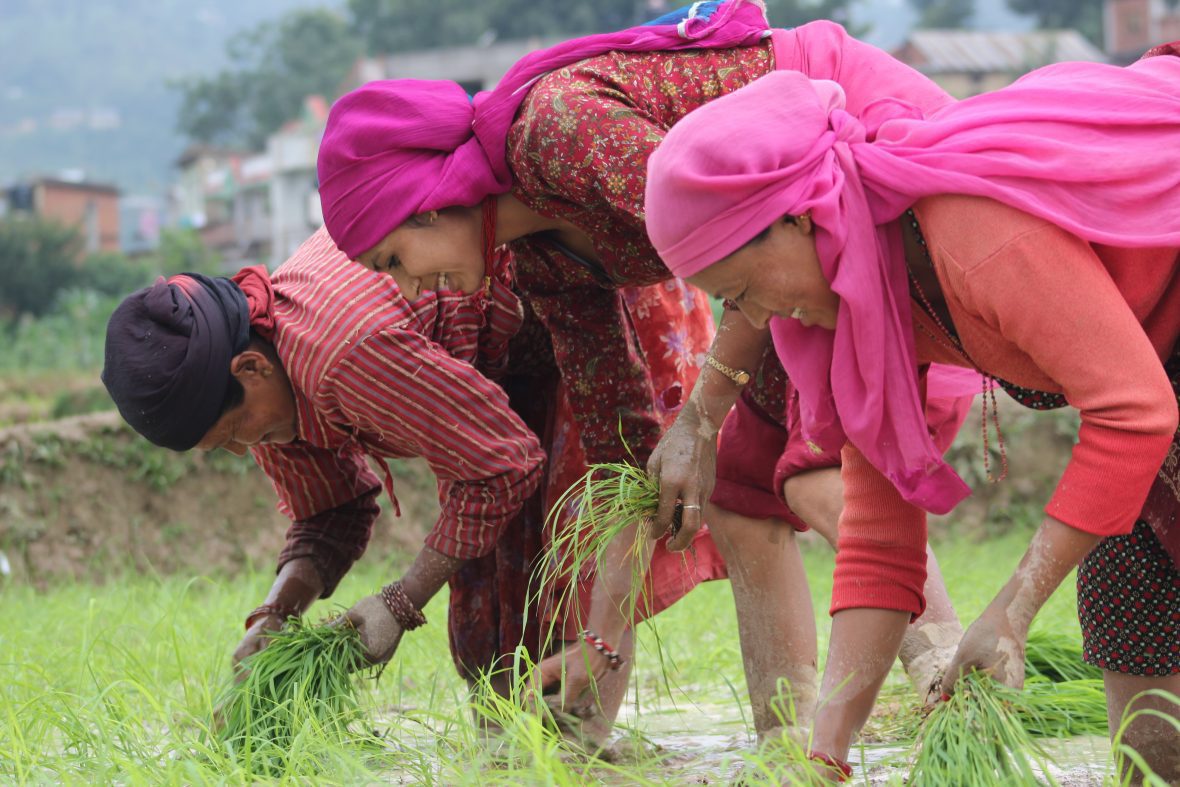
Across villages, farmers return to the fields. Men guide oxen and tractors through the softened earth, preparing long, neat rows for planting. Soon after, women step into ankle-deep mud carrying bundles of young rice seedlings. With remarkable rhythm and patience, they bend, plant, and move forward together, filling the fields with fresh green shoots. The air is filled with laughter, traditional Asare songs, and the unmistakable spirit of the planting season.
This is Ashad 15, Nepal’s National Paddy Day—a day that celebrates the country’s most important crop and the millions of farmers whose lives depend on it. It is also widely known as Dahi-Chiura Day, when families enjoy a traditional meal of beaten rice and curd before heading to the fields.
For Nepal, rice is far more than just another crop.
It is the foundation of everyday life.
From the high Himalayan villages to the fertile plains of the Terai, rice is served at almost every lunch and dinner table. The familiar combination of dal, bhat, and tarkari—lentil soup, steamed rice, and vegetable curry—is more than just a meal; it is a symbol of Nepali identity. Whether rich or poor, young or old, almost every Nepali grows up with rice at the centre of daily life.
Although Nepal covers a relatively small area, it is one of the world’s most geographically diverse countries. Within a distance of only about 300 kilometres, the landscape rises from tropical lowlands at around 70 metres above sea level to the summit of Mount Everest at 8,848 metres. More than 100 ethnic communities and languages share this extraordinary land, yet one tradition unites them all—the importance of rice.
That is why rice planting, known locally as Ropai, is much more than an agricultural activity.
It is a celebration.
Unlike the planting of any other crop, rice transplantation has its own special name, songs, customs, and festivals. Families, neighbours, and entire communities work together in the muddy fields, turning hard labour into a joyful social occasion. Children splash in the water, elders watch with pride, and women sing folk songs that have echoed across Nepal’s valleys for generations.
Yet behind this colourful tradition lies a story of determination.
For farmers, every rice seedling represents hope. They depend on timely rainfall, good-quality seed, affordable fertiliser, irrigation, and fair market prices. A delayed monsoon or an unexpected drought can threaten an entire year’s income. Climate change has made weather patterns increasingly unpredictable, forcing many farmers to take greater risks each planting season.
Rural Nepal has also changed dramatically. Thousands of young people have migrated overseas for employment, leaving many villages with fewer working hands. In many communities, women now carry much of the responsibility for rice cultivation while managing households and caring for their families.
Even so, the planting continues.
Despite the hardships, Nepal’s farmers return to their fields every monsoon with remarkable resilience. Every seedling placed carefully into the mud carries the hope of a golden harvest months later. Every row planted is an investment in family, food security, and the nation’s future.
Rice is not simply food in Nepal—it is culture, identity, history, and survival.
As the monsoon clouds gather and the green fields stretch across the countryside once again, they tell a timeless story. A story of people whose lives remain deeply connected to the land. A story of resilience passed from one generation to the next.
And in every handful of seedlings planted into the soft earth, Nepal’s farmers are not only growing rice—they are planting hope.