

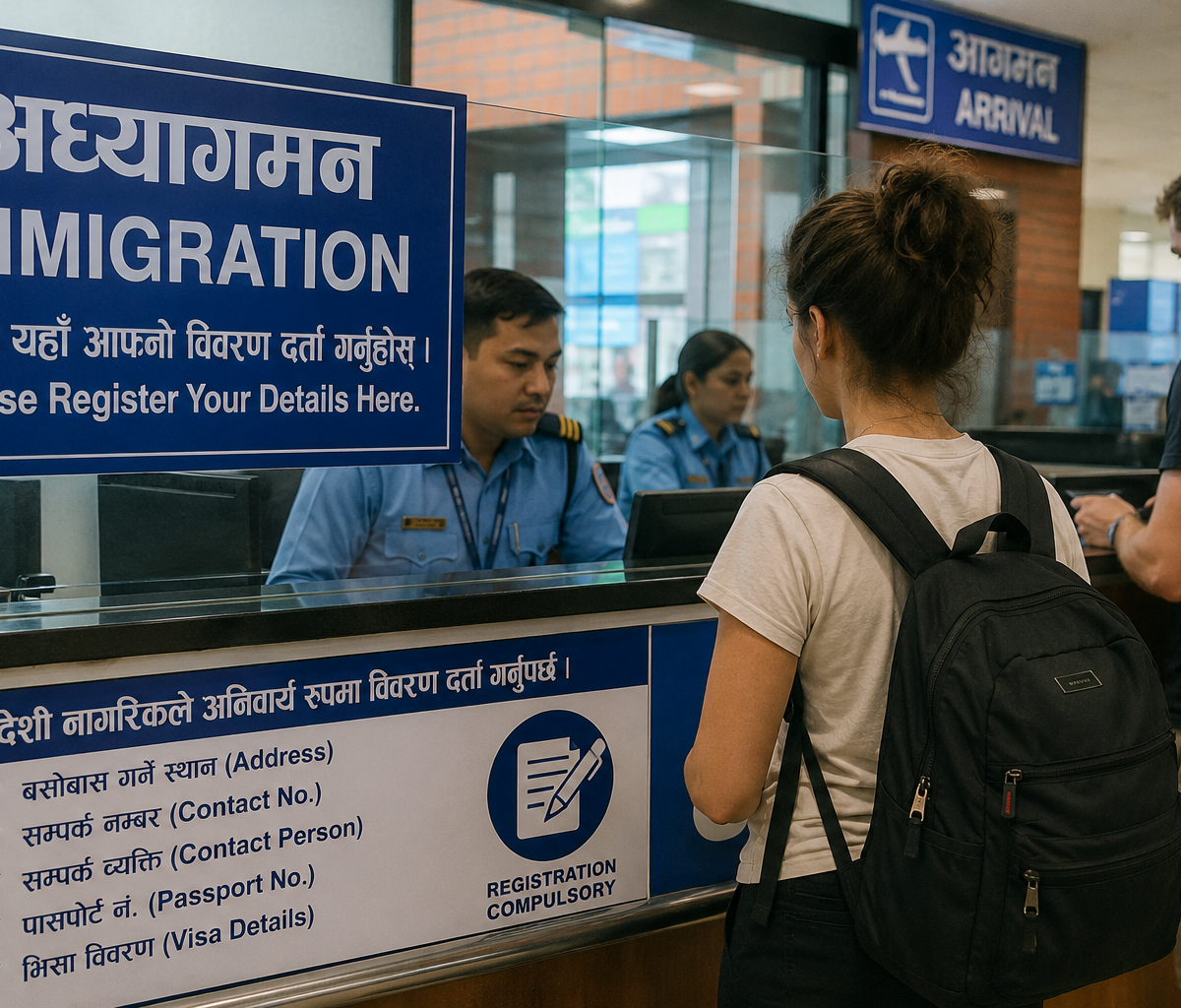
Kathmandu – The Government of Nepal is preparing to strictly enforce mandatory registration of foreign nationals residing in the country through a proposed amendment to immigration laws.
According to a draft bill released by the Ministry of Home Affairs, every foreign citizen entering Nepal will be required to register details of their place of residence, contact number, and emergency contact person at immigration checkpoints.
Under the proposed legislation, operators of hotels, homestays, motels, guest houses, hostels, apartments, monasteries, meditation centres, yoga centres, and private homeowners accommodating foreign nationals will be required to collect and submit guest information to immigration offices, police offices, local ward offices, or the Department of Immigration’s digital information system.
The bill also requires universities, educational institutions, and other organizations providing accommodation to foreign students or employees to register and report their details to the relevant authorities.
Similarly, hospitals, nursing homes, and healthcare providers offering accommodation to foreign patients or their foreign attendants will be obligated to submit related information to government agencies.
The Ministry of Home Affairs said the proposed legal reforms are aimed at making the entry, residence, and departure of foreign nationals in Nepal more organized, secure, and effective. The government also intends to streamline procedures related to Nepali citizens travelling abroad and returning home.
According to the draft bill, the final authority to approve or deny a foreign national’s entry, stay, or departure from Nepal will remain with the Government of Nepal.
The proposed law retains the requirement that foreign visitors must possess a valid passport and a Nepali visa before entering the country. However, special entry and residence arrangements may be granted to citizens of certain countries under bilateral agreements signed between Nepal and those nations.
The ministry has invited feedback from the public, stakeholders, and experts on the draft legislation, stating that the reforms are part of broader efforts to modernize, improve transparency, and make Nepal’s immigration management system more technology-driven.