
Nawalpur, June 19 — What began as a misunderstood initiative in Kawasoti of Nawalpur district has evolved into one of Nepal’s most successful wildlife conservation models, transforming the fate of vultures once feared and stigmatized by local communities.
When the Jatayu Restaurant was established in 2006, many locals were confused by its name and purpose. Some believed it was a human dining facility, while others suspected it might involve serving vulture meat.
“In the beginning, we often had to convince people that this was a site for vulture conservation, not a place for humans to eat, and to educate them on the vital role vultures play in our ecology,” said conservationist D.B. Chaudhary, coordinator of the project.
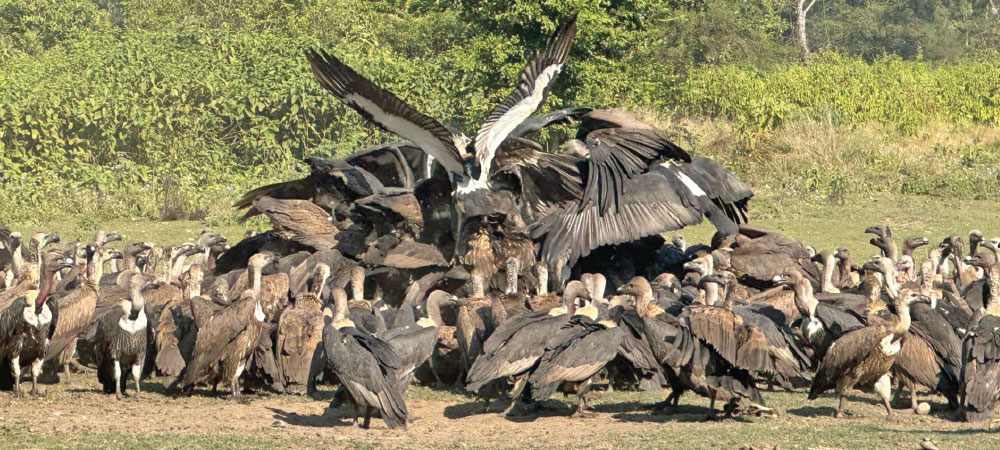
The facility was designed as a managed feeding site, providing safe and chemical-free carcasses to vultures—birds that had long been associated with superstition and bad luck in many communities. In the past, even the sight of a vulture was considered inauspicious, and touching one was believed to require ritual cleansing.
To overcome this perception, the project adopted the name “Jatayu,” inspired by the revered bird figure from the Ramayan. The rebranding helped shift public perception and reduce stigma around the species.
Chaudhary explained that vulture populations had sharply declined over the years due to multiple factors, including the widespread use of the veterinary drug diclofenac, which proved toxic to scavenging birds feeding on treated livestock carcasses. Changes in land use, reduced grazing areas, declining cattle populations, and improved sanitation practices that limited carcass availability further worsened the situation.
“In the past, dead livestock were left in open areas for vultures. Later, people began burying carcasses due to hygiene concerns, which unintentionally reduced food sources for these birds,” he said.
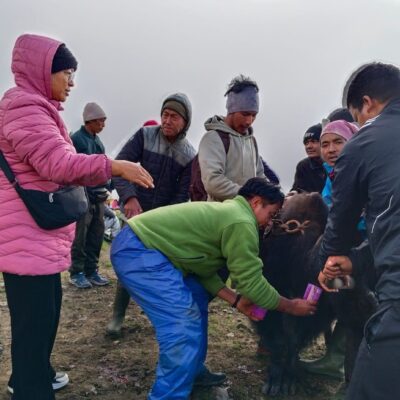
To address the crisis, conservationists proposed a structured feeding system in which elderly or unproductive cattle would be cared for until natural death, after which their carcasses would be safely provided to vultures. With support from conservation organizations, the project secured land, infrastructure, and staffing to begin operations.
Despite early skepticism and rumors among local communities, the initiative gradually built trust. Farmers began to see that animals were being treated humanely and that the project contributed to ecological balance and environmental education.
“One of the most effective decisions was naming it ‘Jatayu Restaurant.’ The name carried respect and curiosity, unlike the negative associations attached to the word ‘vulture’,” Chaudhary said.
Over the past two decades, the results have been remarkable. From just 72 vultures of seven species at the beginning, the population has grown to more than 500 individuals representing eight species. A previously unrecorded species has also been documented in the area.
The project has since gained international recognition and has been replicated in countries including India, Pakistan, and several African nations as a model for vulture conservation.
“The most important achievement is that people now understand vultures. Once perceptions changed, conservation became possible,” Chaudhary said.