

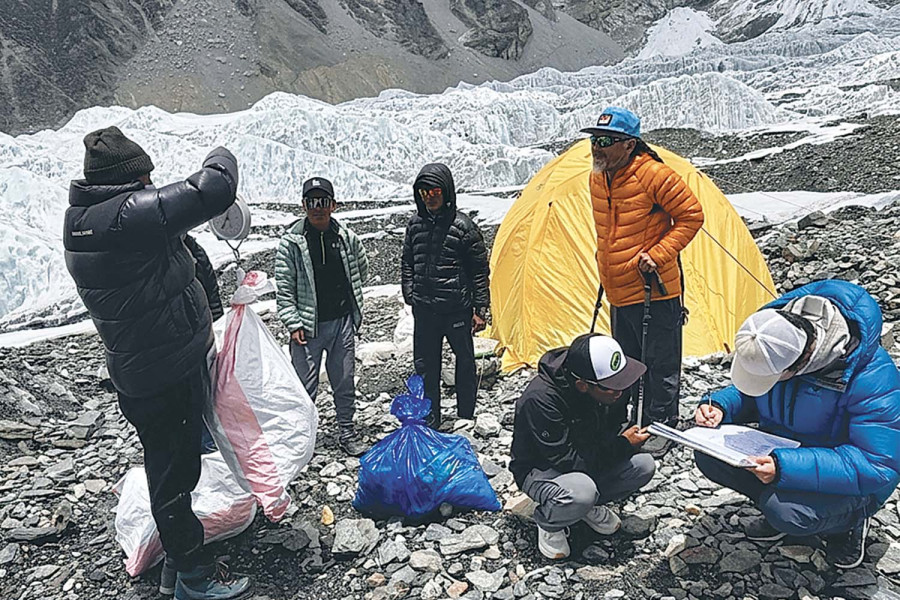
As Everest welcomes record numbers of climbers, a new generation of mountain rangers is taking on the dangerous mission of protecting the world’s highest summit from garbage, pollution, and environmental decline.
Kathmandu: High above the clouds, where oxygen is scarce and every step demands extraordinary endurance, a quiet revolution is unfolding on Mount Everest.
Standing at nearly 6,400 metres above sea level at Camp II, Ngima Wangchu Sherpa is not guiding climbers to the summit. Instead, he is protecting the mountain itself. The 53-year-old veteran mountaineer has become Nepal’s first official mountain ranger, marking the beginning of a new chapter in Everest conservation.
With weather-beaten skin and decades of experience in the Himalayas, Ngima has climbed Everest four times. This spring, however, his mission was unlike any expedition he had undertaken before. Rather than chasing the summit, he spent weeks monitoring waste, educating climbers, coordinating emergency assistance and ensuring mountaineers complied with new environmental rules.
“When climbers first see me, they usually think I am another guide,” Ngima says with a smile. “But once they notice the words ‘Mountain Ranger’ on my jacket, they realize someone is watching.” His presence serves as a reminder that Everest is no longer simply a destination for adventure—it is a fragile environment requiring protection.
Everest’s Growing Environmental Crisis
Over the past three decades, commercial mountaineering has transformed Everest into one of the world’s highest-altitude waste sites. Every climbing season, hundreds of climbers and support teams leave behind oxygen cylinders, tents, ropes, food packaging, gas canisters and human waste. While much of it remains frozen beneath snow and ice, climate change and melting glaciers are gradually exposing decades of accumulated rubbish.
Plastic waste has become one of the greatest environmental threats. Wrappers, food packets and damaged equipment slowly break down into microplastics that contaminate glaciers, rivers and drinking water throughout the Khumbu region. Environmental experts warn that even the smallest piece of litter can remain on the mountain for centuries.
A Ranger’s Mission
This year, the Sagarmatha Pollution Control Committee (SPCC) introduced its first-ever Mountain Ranger Programme in response to growing concerns over Everest’s environmental condition. A dedicated ranger station was established at Camp II, where Ngima Wangchu monitored climbers returning from higher camps.
Under newly introduced regulations, every climber and high-altitude guide is required to carry at least two kilograms of waste from Camp III, Camp IV or higher and hand it over to mountain rangers before descending. Each load is carefully weighed, recorded and transported to Everest Base Camp before being removed from the mountain.
Beyond waste collection, Ngima also provides emergency assistance by supplying oxygen to climbers in distress and helping coordinate rescue operations when necessary. “It is not only about collecting garbage,” he explains. “It is about teaching people that Everest deserves respect.”
Cleaning Everest Is No Easy Task
Removing rubbish from the upper slopes of Everest is one of the world’s most difficult environmental operations. Every kilogram of waste must be carried across glaciers, steep ice walls and dangerous avalanche zones.
The challenge extends beyond abandoned equipment. Since mountaineering began on Everest, more than 300 climbers have died, with nearly 200 bodies still remaining high on the mountain. Recovering them is one of the most dangerous and expensive operations in high-altitude mountaineering, often costing tens of thousands of dollars.
For many families, retrieval is either financially impossible or simply too dangerous. As a result, many bodies remain where they fell, becoming part of Everest’s harsh landscape.
Record Climber Numbers Increase Pressure
The pressure on Everest continues to grow. This spring, Nepal issued a record 495 climbing permits for the south side of Everest. Including guides and support staff, more than 1,000 people reached the summit during the season.
With increasing climber numbers comes increasing waste. According to the SPCC, teams removed more than 1.2 tonnes of non-recyclable waste from Camp III and the South Col during this year’s climbing season. They also collected hundreds of empty gas cylinders, portable stoves and nearly 1.8 tonnes of human waste from higher camps.
Across the Khumbu region, more than 6.5 tonnes of additional rubbish—including tents, ropes, plastics and metal waste—were collected. The organisation says these figures represent only part of the mountain’s environmental burden.
Stronger Rules for a Cleaner Everest
Nepal has begun introducing stricter environmental regulations to address the growing crisis. Climbers are already required to return a minimum amount of garbage before receiving their refundable environmental deposit.
Authorities are now considering replacing that refundable deposit with a permanent environmental conservation fee that would finance long-term cleanup programmes and mountain protection initiatives. The government has also increased Everest climbing permit fees, with spring expedition royalties rising from US$11,000 to US$15,000 per foreign climber. Officials say the additional revenue will support conservation and improve mountain safety.
Looking Ahead
The Mountain Ranger Programme is expected to expand significantly. After beginning with just two rangers this year, the SPCC plans to deploy seven or eight mountain rangers in future climbing seasons while extending waste management efforts to even higher camps.
Environmentalists believe the initiative marks an important shift in how Everest is managed—from simply cleaning waste after expeditions to actively preventing pollution before it occurs.
For Ngima Wangchu Sherpa, however, the mission remains deeply personal. To the outside world, Everest is the highest mountain on Earth.
To the Sherpa community, it is far more than a climbing destination. “It is our sacred mountain,” Ngima says. “Protecting it is not only our responsibility—it is our duty to future generations.”