
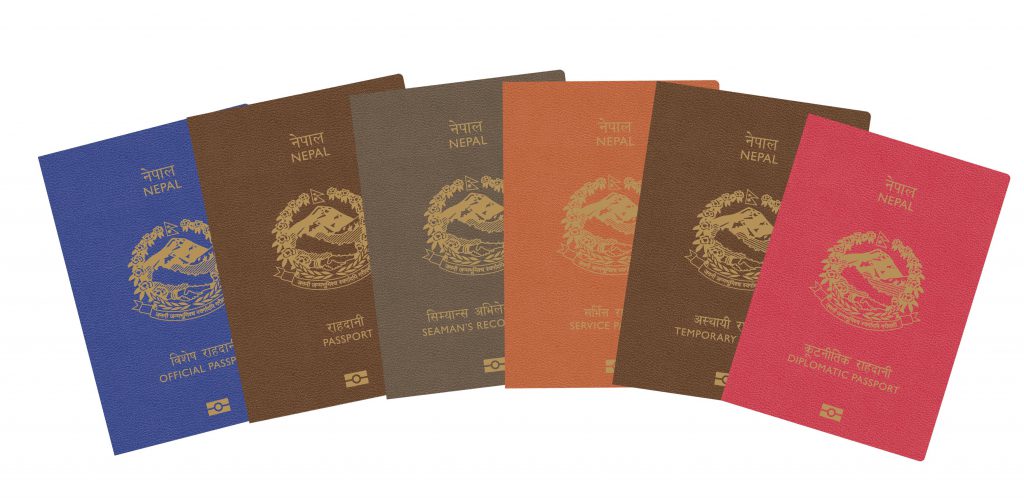
Kathmandu: Nepal is facing an imminent passport shortage after a corruption investigation stalled the distribution of more than 500,000 electronic passports already delivered to the government by a German supplier, leaving the country with fewer than 45,000 passport booklets in reserve.
According to The Kathmandu Post, the Department of Passports is under mounting pressure to maintain passport services as daily applications continue to reach between 5,000 and 6,000. Officials warn that unless an urgent decision is made, Nepal could soon face serious disruptions in passport issuance.
The uncertainty began after the Commission for Investigation of Abuse of Authority (CIAA) filed corruption charges against several officials from the Department of Passports and local representatives of German companies Veridos GmbH and Muehlbauer ID Service GmbH over the procurement of Nepal’s electronic passport system.
Although Veridos has already supplied half a million passport booklets, the government has yet to approve their distribution while the corruption case remains before the court.
At the same time, Nepal’s long-time passport supplier, French company IDEMIA (now operating as IN Group), is preparing to conclude its operations in Nepal after more than a decade of service, further complicating the government’s options.
Officials are now weighing two difficult choices: proceed with using the German-supplied passports despite the ongoing legal proceedings, or negotiate a temporary agreement with the French supplier to provide additional passport booklets until the dispute is resolved.
Foreign Minister Shisir Khanal said the German companies have been given approximately three weeks to complete the technical systems required for passport production and personalization.
“If the German companies fail to make the passport printing and distribution system operational within that timeframe, the government will consider alternative arrangements,” Khanal said, according to The Kathmandu Post.
Officials also noted that more than 100,000 of the newly supplied passports must first be distributed to the International Civil Aviation Organization (ICAO) and foreign governments as specimen documents before they can be officially issued, reducing the immediately available stock.
Diplomatic Dimension Emerges
The passport dispute has also attracted international attention. Following the CIAA’s decision to prosecute local representatives of the German firms, both companies reportedly raised the matter with the German government. Nepal’s Acting Ambassador to Germany, Sagar Phuyal, was invited to a meeting with officials from Germany’s Foreign Ministry to clarify the legal proceedings and explain whether the case could affect the passport contract.
According to Nepal’s Ministry of Foreign Affairs, the discussion was conducted in a friendly atmosphere. German officials sought clarification on the nature of the legal case, the expected duration of court proceedings, and whether the companies would be allowed to appoint legal representatives in Nepal.
The ministry also rejected reports suggesting that Germany had lodged any formal diplomatic protest, stating that both countries agreed the issue should not affect their longstanding bilateral relationship.
Leadership Changes at Passport Department
The corruption case has also resulted in administrative changes within Nepal’s passport administration. Former Director General Tirtha Raj Aryal, one of those charged by the CIAA, has been replaced, with Joint Secretary Dipak BK now overseeing the Department of Passports until further notice.
Urgent Decision Needed
With passport applications continuing to rise each day and existing stock rapidly declining, officials acknowledge that Nepal has limited time to prevent disruption to one of its most essential public services.
The government is now expected to make a crucial decision in the coming weeks on whether to activate the German-supplied passports or secure an interim supply through another arrangement while the corruption case proceeds through the courts.
Source: Adapted from reporting by Anil Giri, The Kathmandu Post.