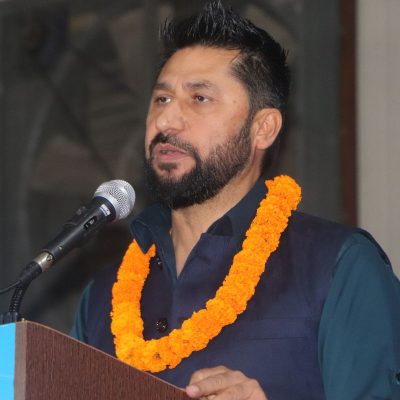

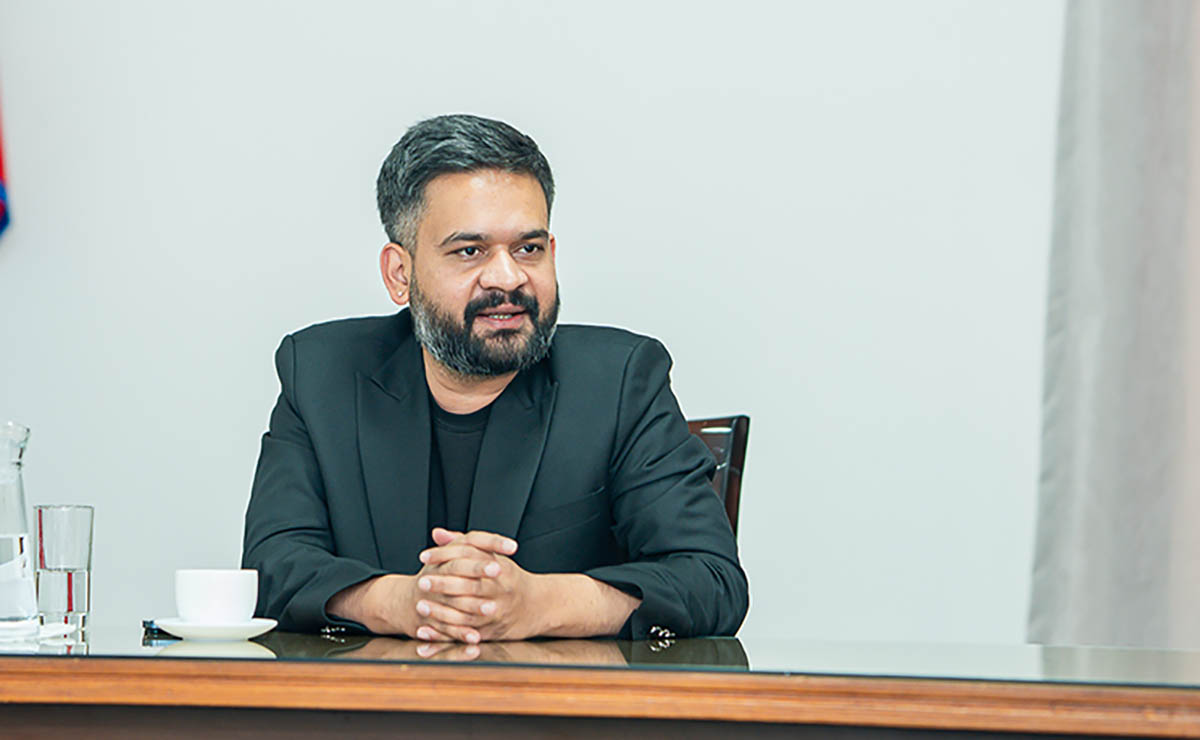
Kathmandu: Prime Minister Balendra Shah has assured Nepal’s hotel industry that the government is fully committed to promoting tourism and urged entrepreneurs to invest and expand their businesses with confidence.
During a meeting with office bearers of the Hotel Association Nepal (HAN) at the Office of the Prime Minister and Council of Ministers on Wednesday, Prime Minister Shah said the government considers the private sector a key development partner and called for closer collaboration to strengthen the country’s tourism industry.
He encouraged hotel operators to conduct their businesses in full compliance with the law, register small and medium-sized hotels with the Department of Tourism, bring them into the formal tax system, and explore opportunities for cooperation through Public-Private Partnership (PPP) models.
At the meeting, attended by Minister for Culture, Tourism and Civil Aviation Khadga Raj Paudel, representatives of HAN said Nepal’s hotel industry has the capacity to accommodate up to four million tourists annually, but the country currently welcomes only around 1.2 million visitors each year.
They stressed that increasing tourist arrivals would generate significant employment opportunities, help reduce the outflow of young Nepalis seeking jobs abroad, and make a stronger contribution to the national economy.
The hotel industry also highlighted Nepal’s enormous potential to become a leading destination for wellness tourism, destination weddings, and cross-border tourism, while urging the government to introduce policy reforms to unlock that potential.
Among their key requests, hotel operators called for electricity tariffs for hotels to be aligned with those offered to productive industries. They also proposed raising the threshold for mandatory Initial Environmental Examination (IEE) studies from hotels with 25 beds to 50 beds, arguing that the current requirement is impractical for small and medium-sized establishments.
The association further urged the government to ensure the full-scale operation of Pokhara International Airport and Gautam Buddha International Airport in Bhairahawa, improve the services of Nepal Airlines, and amend provisions of the Foreign Investment and Technology Transfer Act relating to trademark royalty payments. They suggested allowing royalty fees to be determined through mutual agreement rather than being subject to the existing cap.
Hotel entrepreneurs also called for a review of laws affecting the hospitality sector, easier procedures for importing jewellery used in destination weddings, and stronger international promotion of Nepal’s wellness tourism. They recommended moving beyond conventional photo and video campaigns by adopting comprehensive storytelling-based promotional packages supported by tourism experts.
The meeting was attended by Acting President of Hotel Association Nepal Dinesh Tuladhar, General Secretary Sajan Shakya, Treasurer Yubaraj Shrestha, Executive Committee members Jayadin Shrestha and Ashlesha Karki, and Secretariat Chief Tek Bahadur Mahat.